Challenges Hiring Teams Face When Screening Candidates Manually and How to Overcome Them
 By Wisedoc | Published on July 22, 2026 | 10 min read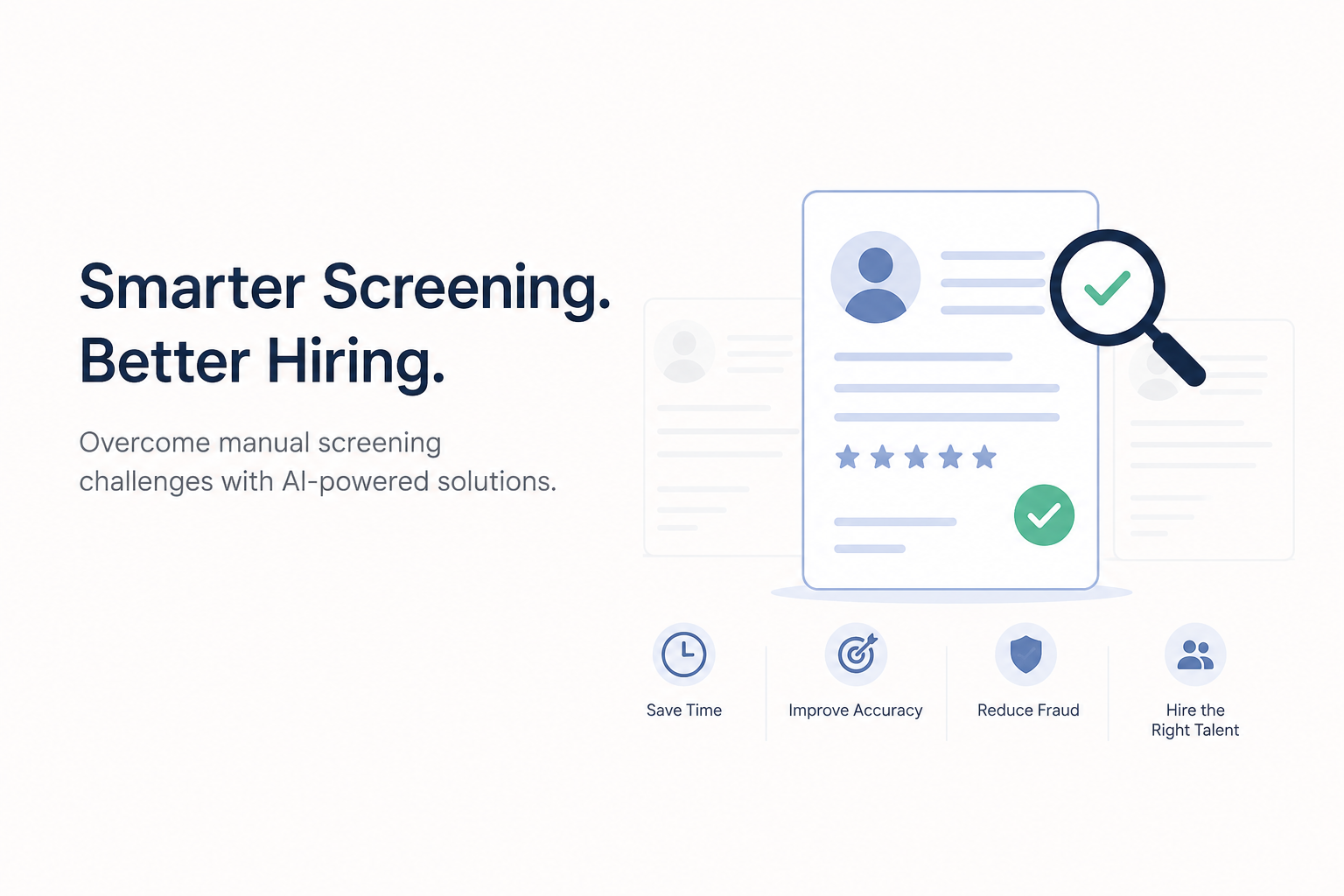
Hiring has become more competitive than ever. Recruiters are expected to review hundreds of resumes, identify qualified candidates, verify credentials, and move quickly before top talent accepts another offer. Yet many hiring teams still rely on manual resume screening, spreadsheets, and human judgment alone.
While manual screening has worked for years, today's hiring landscape has changed. The volume of applications has increased, resumes are becoming more optimized for Applicant Tracking Systems (ATS), and candidate fraud is on the rise. These challenges make manual screening slower, less accurate, and more expensive.
In this article, we'll explore the biggest challenges hiring teams face with manual candidate screening and practical ways to overcome them.
1. High Volume of Applications
A single job posting can attract hundreds or even thousands of applications within a few days. Reviewing every resume manually takes hours, often delaying the hiring process.
When recruiters spend excessive time reading resumes, qualified candidates may lose interest or accept offers from competitors before they are contacted.
How to Overcome It
Use AI-powered resume screening tools that automatically rank candidates based on skills, experience, certifications, and job requirements. This allows recruiters to focus only on the most relevant applicants while significantly reducing screening time.
2. Human Bias During Screening
Manual resume screening can unintentionally introduce unconscious bias. Factors such as names, educational institutions, employment gaps, or previous employers may influence decisions even when they are unrelated to job performance.
This can lead to missed opportunities and reduced workforce diversity.
How to Overcome It
Implement structured screening criteria and standardized evaluation methods. AI-assisted screening can also help by evaluating candidates based on objective qualifications rather than personal characteristics.
3. Resume Keyword Stuffing
Many candidates optimize their resumes by adding keywords from job descriptions to increase their chances of getting shortlisted. However, keyword matching alone doesn't always indicate genuine expertise.
Recruiters may spend valuable time interviewing candidates who lack practical skills despite having keyword-rich resumes.
How to Overcome It
Move beyond simple keyword matching by using semantic skill analysis and contextual AI that evaluates actual experience, project relevance, and career progression instead of just keyword frequency.
4. Candidate Fraud and Misrepresentation
Hiring fraud has become increasingly sophisticated. Recruiters frequently encounter resumes with exaggerated experience, fake certifications, manipulated employment histories, and even AI-generated profiles.
Manual verification is time-consuming and often fails to detect subtle inconsistencies.
How to Overcome It
Adopt automated fraud detection systems that analyze resumes for inconsistencies, suspicious employment patterns, duplicate information, document manipulation, and credential verification before candidates move to interviews.
5. Inconsistent Evaluation Across Recruiters
Different recruiters may evaluate the same resume differently based on personal preferences or varying levels of experience.
This inconsistency can result in qualified candidates being overlooked while less suitable applicants advance through the hiring process.
How to Overcome It
Create standardized screening frameworks with predefined scoring criteria. AI-powered scoring systems can provide consistent candidate rankings while allowing recruiters to make final hiring decisions.
6. Time-Consuming Candidate Comparison
Comparing dozens of similar resumes manually requires recruiters to constantly switch between documents, notes, and spreadsheets.
This process becomes increasingly difficult as applicant numbers grow.
How to Overcome It
Use centralized hiring platforms that generate side-by-side candidate comparisons based on skills, experience, education, certifications, and overall job fit.
7. Missing Qualified Candidates
Recruiters often work under tight deadlines and heavy workloads. Fatigue and time pressure increase the likelihood of overlooking strong candidates hidden among hundreds of applications.
Missing top talent can significantly impact hiring quality and business performance.
How to Overcome It
Leverage intelligent candidate ranking systems that prioritize applicants based on overall suitability rather than application order, ensuring highly qualified candidates receive timely attention.
8. Slow Hiring Process
Manual screening creates bottlenecks throughout recruitment. Delayed resume reviews lead to slower interviews, slower offers, and increased candidate drop-offs.
In competitive industries, hiring speed often determines whether organizations secure top talent.
How to Overcome It
Automate repetitive screening tasks while allowing recruiters to focus on interviews, relationship building, and final hiring decisions. Faster screening leads to shorter time-to-hire and improved candidate experience.
9. Limited Visibility into Candidate Quality
Manual screening provides little insight into overall hiring patterns. Recruiters often lack data on why candidates were selected or rejected, making it difficult to improve hiring strategies over time.
How to Overcome It
Implement recruitment analytics that track screening accuracy, candidate quality, hiring outcomes, and recruiter performance. Data-driven insights enable continuous improvement in hiring processes.
10. Recruiter Burnout
Reviewing hundreds of resumes every week is repetitive and mentally exhausting. Administrative tasks consume valuable time that recruiters could spend building relationships with candidates and hiring managers.
Burnout not only affects productivity but also increases the risk of hiring mistakes.
How to Overcome It
Automate repetitive screening activities while enabling recruiters to focus on strategic hiring decisions, candidate engagement, and employer branding initiatives.
The Future of Candidate Screening
Manual screening is no longer sufficient for modern recruitment. As application volumes increase and hiring fraud becomes more sophisticated, organizations need smarter approaches to identify qualified candidates quickly and accurately.
Artificial intelligence should not replace recruiters—it should empower them. By automating repetitive tasks, improving consistency, detecting fraud, and providing data-driven insights, AI enables hiring teams to spend more time on meaningful conversations with candidates and better hiring decisions.
Conclusion
Manual candidate screening presents numerous challenges, including high application volumes, unconscious bias, inconsistent evaluations, slow hiring cycles, recruiter burnout, and increasing candidate fraud. These issues can negatively impact both hiring quality and business outcomes.
Organizations that combine experienced recruiters with AI-powered screening technologies can significantly improve hiring efficiency, reduce time-to-hire, enhance candidate quality, and create a more reliable recruitment process.
The future of hiring isn't about replacing human judgment it's about giving hiring teams the tools they need to make faster, smarter, and more confident hiring decisions.
Good or bad, we'd love to hear your thoughts. Find us on X or connect with us on LinkedIn.
Here are some related articles you may find interesting
Resume Fraud vs. Candidate Fraud: What's the Difference?
Learn how to build a scalable high-volume candidate screening workflow using AI resume screening, candidate ranking, fraud detection, assessments, interviews, and human review.
Resume Fraud vs. Candidate Fraud: What's the Difference?
Resume fraud involves false information in applications, while candidate fraud can include identity misrepresentation, proxy interviews, fake profiles, and assessment manipulation. Learn how recruiters can detect both.
The Real Cost of a Bad Healthcare Hire
A bad healthcare hire can create recruitment costs, overtime, lost productivity, compliance risks, and operational disruption. Learn how better screening can reduce hiring risk.
How AI Is Changing the First 10 Minutes of Candidate Evaluation
AI is transforming the first 10 minutes of candidate evaluation by analyzing skills, experience, job fit, and risk signals faster. Learn how recruiters can combine AI with human judgment.