The Hidden Cost of Hiring: Why Companies Spend 7+ Hours Verifying Every Candidate
 By Wisedoc | Published on July 23, 2026 | 10 min read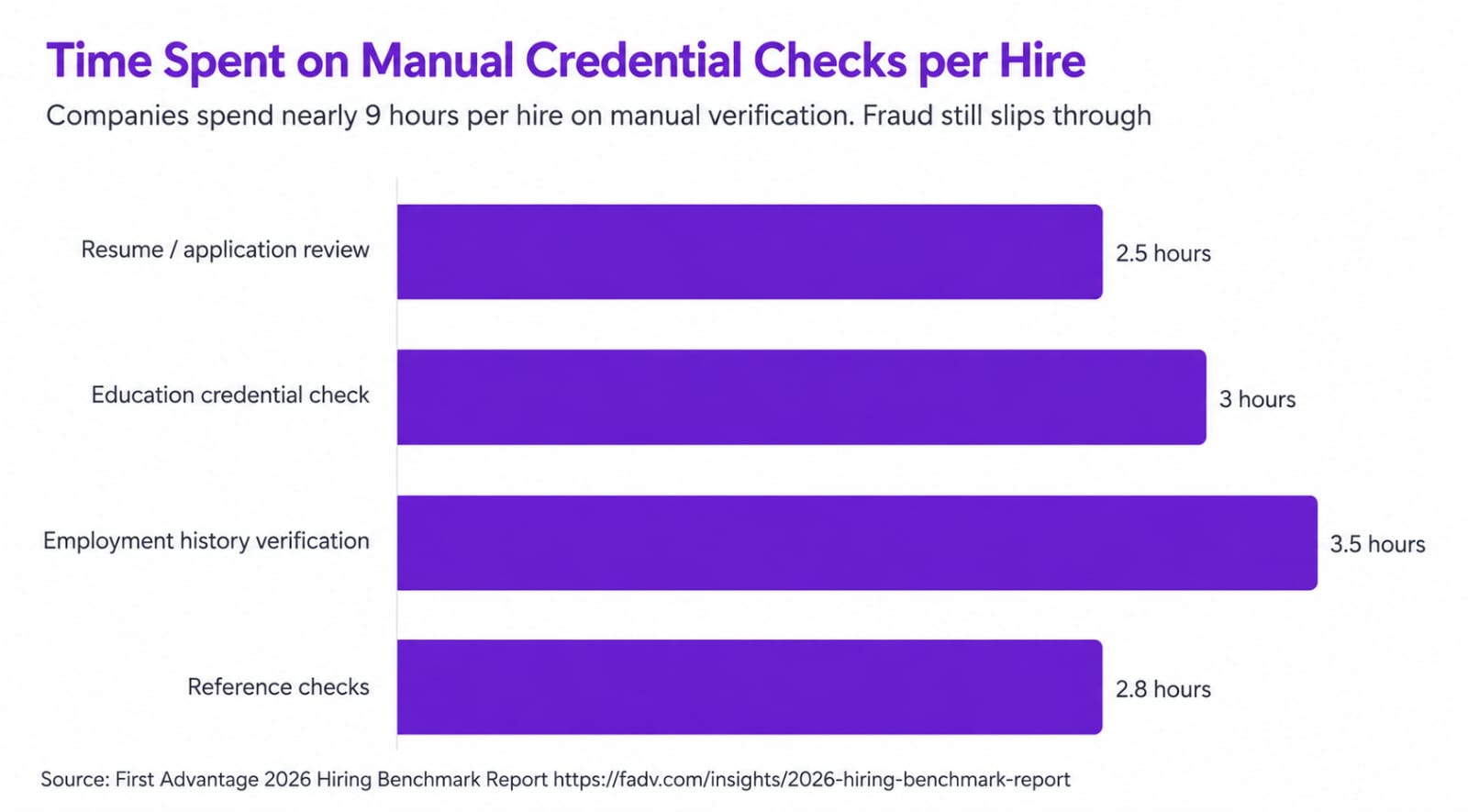
Hiring the right candidate has never been more challenging. Beyond reviewing resumes and conducting interviews, recruiters spend a significant amount of time manually verifying candidate credentials. On average, companies spend more than seven hours per hire checking employment history, education, certifications, licenses, and other critical information before making a hiring decision.
Why Manual Credential Verification Takes So Long
Credential verification is a detailed process that requires recruiters to validate multiple aspects of a candidate's profile. This often includes contacting previous employers, confirming educational qualifications, verifying professional certifications, reviewing supporting documents, and resolving inconsistencies found across applications.
While these steps are necessary, they consume valuable recruiting time that could otherwise be spent engaging qualified candidates and improving the hiring experience.
The Growing Complexity of Candidate Verification
Recruitment has changed significantly over the past few years. Hiring teams are no longer dealing only with inaccurate resumes or outdated information. They now face AI-generated resumes, exaggerated work experience, manipulated documents, and increasingly sophisticated forms of candidate fraud.
As these challenges continue to evolve, relying solely on manual verification becomes both slower and less effective.
The Business Impact of Spending 7+ Hours Per Hire
Seven hours may not seem substantial for a single hire, but the numbers grow quickly. An organization hiring 100 employees could spend more than 700 hours on manual verification alone. This results in higher operational costs, slower hiring cycles, delayed onboarding, and an increased workload for recruiting teams.
Long verification processes can also lead to losing top candidates who accept competing offers before the hiring process is complete.
How AI Is Transforming Credential Verification
Artificial intelligence is helping organizations automate many of the repetitive tasks involved in candidate verification. AI can quickly analyze resumes, identify inconsistencies, validate information across multiple data points, detect potential fraud indicators, and prioritize candidates that deserve further review.
Rather than replacing recruiters, AI enables them to focus on interviewing, relationship building, and making informed hiring decisions.
Building a Faster and More Reliable Hiring Process
The goal is not simply to reduce verification time. It is to improve hiring accuracy while maintaining compliance and minimizing risk. Organizations that combine human expertise with AI-powered verification can shorten hiring cycles, reduce manual effort, and make more confident hiring decisions.
Conclusion
Manual credential verification remains an essential part of recruitment, but it should not consume hours of a recruiter's day. As hiring volumes increase and candidate fraud becomes more sophisticated, organizations need smarter verification processes that deliver both speed and accuracy.
By adopting AI-powered credential verification, hiring teams can reduce administrative work, identify risks earlier, and spend more time hiring the right people instead of verifying paperwork.
Good or bad, we'd love to hear your thoughts. Find us on X or connect with us on LinkedIn.
Here are some related articles you may find interesting
Resume Fraud vs. Candidate Fraud: What's the Difference?
Learn how to build a scalable high-volume candidate screening workflow using AI resume screening, candidate ranking, fraud detection, assessments, interviews, and human review.
Resume Fraud vs. Candidate Fraud: What's the Difference?
Resume fraud involves false information in applications, while candidate fraud can include identity misrepresentation, proxy interviews, fake profiles, and assessment manipulation. Learn how recruiters can detect both.
The Real Cost of a Bad Healthcare Hire
A bad healthcare hire can create recruitment costs, overtime, lost productivity, compliance risks, and operational disruption. Learn how better screening can reduce hiring risk.
How AI Is Changing the First 10 Minutes of Candidate Evaluation
AI is transforming the first 10 minutes of candidate evaluation by analyzing skills, experience, job fit, and risk signals faster. Learn how recruiters can combine AI with human judgment.