The Cost of an Unfilled Position: The Hidden Expense Most Organizations Overlook
 By Wisedoc | Published on August 2, 2026 | 10 min read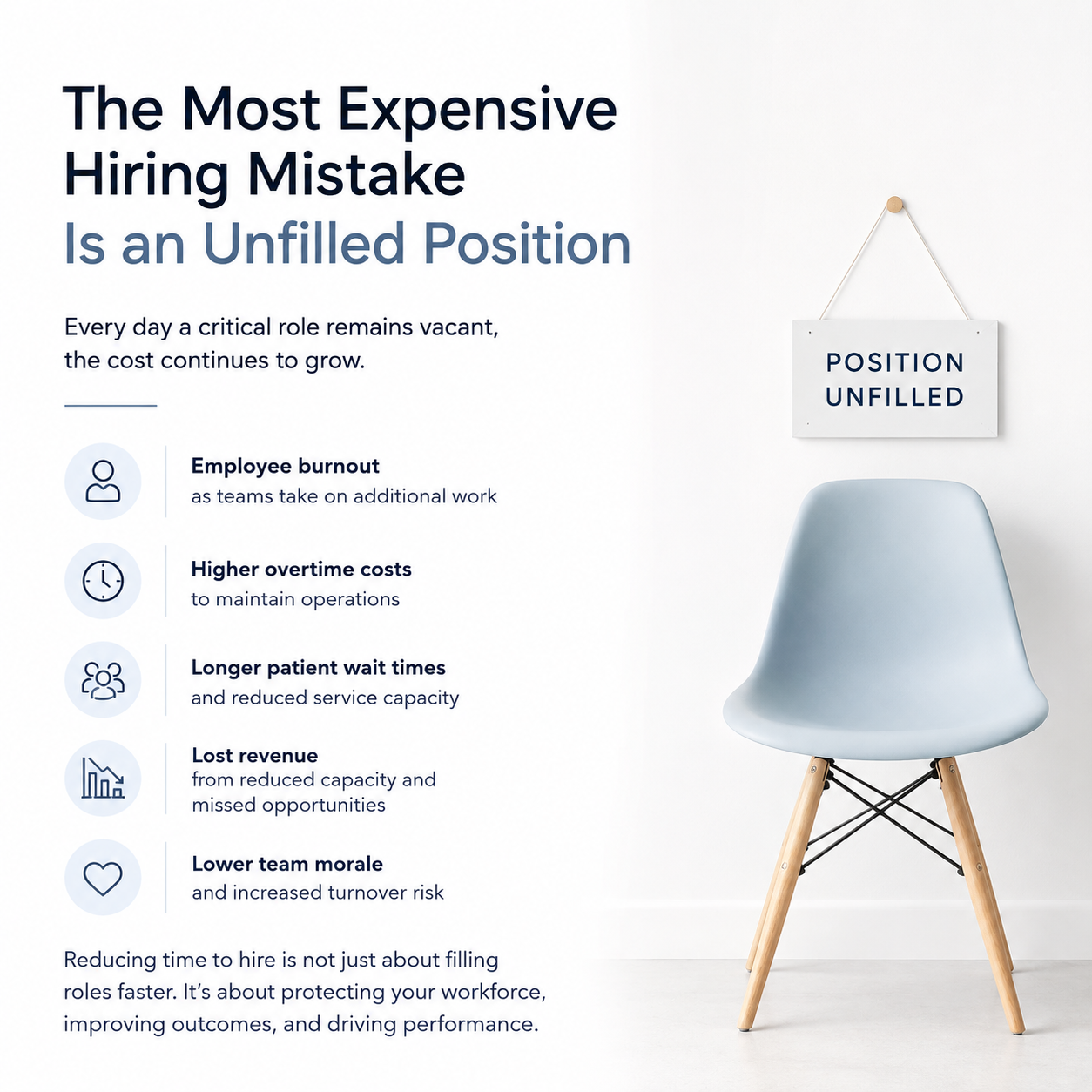
When organizations think about hiring costs, the conversation often focuses on bad hires. While hiring the wrong person can be expensive, there is another cost that is often overlooked: leaving a critical position unfilled.
Every day a role remains vacant, the impact extends beyond the recruitment team. It affects employees, operations, customers, and ultimately the organization's bottom line.
Employee Burnout Increases
When a position remains open, existing employees are expected to take on additional responsibilities. While teams may be able to manage temporarily, prolonged vacancies often lead to increased workloads, stress, and burnout. Over time, this can reduce productivity and increase the likelihood of employee turnover.
Overtime Costs Continue to Rise
Organizations frequently rely on overtime to maintain operations during staffing shortages. Although this may solve immediate scheduling challenges, overtime expenses accumulate quickly and can significantly increase labor costs. In many cases, the cost of prolonged overtime exceeds the investment required to fill the role.
Longer Wait Times and Reduced Service Capacity
In healthcare and other service-driven industries, staffing shortages directly impact the customer experience. Patients may experience longer wait times, appointments may be delayed, and teams may struggle to maintain service quality. These operational challenges can affect both satisfaction and outcomes.
Lost Revenue Opportunities
An unfilled position can limit an organization's ability to serve customers, complete projects, or expand operations. Reduced capacity often translates into missed opportunities, delayed revenue, and slower business growth.
Declining Team Morale
Vacancies can place additional pressure on employees who continue to carry the workload. As stress increases and workloads become unsustainable, team morale declines. This can contribute to disengagement and create a cycle of higher turnover and additional hiring challenges.
Why Reducing Time to Hire Matters
Reducing time to hire is about more than filling positions quickly. It helps organizations protect employee wellbeing, maintain operational efficiency, reduce unnecessary costs, and deliver consistent service.
By improving candidate screening, streamlining recruitment workflows, and identifying qualified candidates faster, organizations can minimize the hidden costs associated with prolonged vacancies and build a stronger, more resilient workforce.
Final Thoughts
The true cost of an unfilled position is rarely reflected in a single report. It appears in employee burnout, rising overtime expenses, reduced productivity, declining morale, and lost business opportunities.
Organizations that prioritize efficient hiring are not simply filling vacancies. They are investing in operational stability, employee satisfaction, and long-term business success.
Good or bad, we'd love to hear your thoughts. Find us on X or connect with us on LinkedIn.
Here are some related articles you may find interesting
Resume Fraud vs. Candidate Fraud: What's the Difference?
Learn how to build a scalable high-volume candidate screening workflow using AI resume screening, candidate ranking, fraud detection, assessments, interviews, and human review.
Resume Fraud vs. Candidate Fraud: What's the Difference?
Resume fraud involves false information in applications, while candidate fraud can include identity misrepresentation, proxy interviews, fake profiles, and assessment manipulation. Learn how recruiters can detect both.
The Real Cost of a Bad Healthcare Hire
A bad healthcare hire can create recruitment costs, overtime, lost productivity, compliance risks, and operational disruption. Learn how better screening can reduce hiring risk.
How AI Is Changing the First 10 Minutes of Candidate Evaluation
AI is transforming the first 10 minutes of candidate evaluation by analyzing skills, experience, job fit, and risk signals faster. Learn how recruiters can combine AI with human judgment.